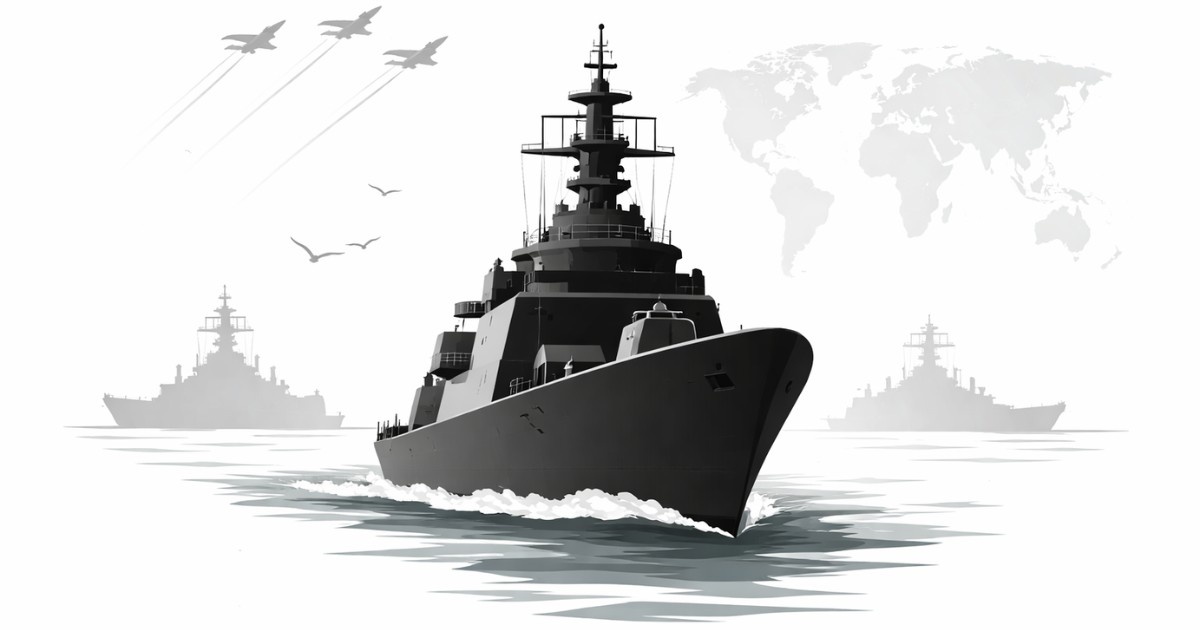
The International Fleet Review 2026 has emerged as one of the most important global military events of the year. Hosted by Indian Navy, the event highlights India’s growing maritime influence and its expanding strategic partnerships.
The International Fleet Review 2026 brings together naval forces from multiple countries. Warships, submarines, and maritime aircraft are participating in ceremonial parades, joint exercises, and high-level defense discussions.
At a time when global maritime security is under pressure, the International Fleet Review 2026 serves as a platform for cooperation, diplomacy, and strategic messaging.
What Is the International Fleet Review?
An international fleet review is a large naval gathering where ships from friendly nations assemble at a designated port. These events showcase maritime strength and foster defense cooperation.
India has hosted fleet reviews before, but the International Fleet Review 2026 stands out due to rising geopolitical tensions in the Indo-Pacific region.
The event demonstrates India’s commitment to maintaining open sea lanes, maritime stability, and peaceful cooperation.
Why International Fleet Review 2026 Matters Now
The International Fleet Review 2026 comes at a time of shifting global power dynamics. The Indo-Pacific region has become central to global trade and security strategies.
India’s role in the region has expanded significantly. The country is strengthening partnerships with major naval powers while also engaging smaller maritime nations.
Defense analysts say the International Fleet Review 2026 is not just ceremonial. It sends a strong message about India’s readiness and diplomatic outreach.
Key Participating Nations
Several friendly nations have sent naval ships and delegations to the International Fleet Review 2026. These include partners from Asia, Europe, and beyond.
Countries participating in exercises and meetings during the review include members of the Quadrilateral Security Dialogue, commonly known as the Quadrilateral Security Dialogue.
This grouping includes India, the United States, Japan, and Australia. Their growing naval coordination reflects a shared interest in maintaining regional stability.
India’s Naval Modernisation on Display
The International Fleet Review 2026 provides an opportunity for India to showcase its expanding naval capabilities.
Advanced destroyers, stealth frigates, submarines, and aircraft carriers are part of the display. Indigenous defense manufacturing has played a key role in strengthening maritime assets.
India’s flagship aircraft carrier, INS Vikrant, is among the highlights. Its presence underscores India’s push toward self-reliance in defense production.
The review also demonstrates improved surveillance systems, missile technology, and maritime patrol capabilities.
Naval Diplomacy in Action
The International Fleet Review 2026 is as much about diplomacy as it is about defense.
High-level bilateral meetings are being held alongside ceremonial activities. Defense ministers and naval chiefs are discussing joint exercises, technology sharing, and maritime security frameworks.
Naval diplomacy plays a crucial role in preventing conflicts. By building trust and transparency, such events reduce misunderstandings among nations.
India has consistently promoted the idea of “Security and Growth for All in the Region,” often referred to as SAGAR.
Strategic Partnerships Strengthened
The International Fleet Review 2026 reflects India’s expanding global partnerships.
Joint naval drills and coordinated patrols have increased in recent years. Maritime cooperation now extends to anti-piracy operations, humanitarian missions, and disaster relief.
The review allows participating nations to exchange best practices and enhance interoperability.
Defense experts say that improved interoperability ensures smoother coordination during emergencies or joint operations.
Indo-Pacific Focus
The Indo-Pacific remains central to the International Fleet Review 2026 discussions.
The region carries a major portion of global trade. Any disruption in these waters affects global supply chains.
India’s maritime strategy focuses on safeguarding sea routes and supporting a rules-based order.
By hosting the International Fleet Review 2026, India reinforces its position as a responsible regional power.
Technology and Future Warfare
Modern naval warfare is evolving rapidly. Artificial intelligence, unmanned systems, and cyber security are becoming critical components of maritime defense.
The International Fleet Review 2026 includes discussions on integrating advanced technologies into naval fleets.
Experts believe future naval dominance will depend not only on fleet size but also on technological superiority.
India is investing in research and development to keep pace with global advancements.
Humanitarian and Disaster Response Role
Navies are not limited to combat roles. They also respond to natural disasters and humanitarian crises.
The International Fleet Review 2026 highlights cooperation in disaster relief missions.
India’s navy has played a vital role in evacuations and relief efforts during regional emergencies.
By strengthening partnerships, countries can respond faster and more effectively to crises.
Public Engagement and Soft Power
The International Fleet Review 2026 is also an opportunity for public engagement.
Citizens and students are being given controlled access to observe naval ships and learn about maritime security.
Such events enhance awareness and inspire interest in defense careers.
Soft power plays an important role in international relations. A well-organized fleet review enhances India’s global image.
Economic and Strategic Impact
Maritime security directly affects economic growth. Secure sea lanes ensure uninterrupted trade.
The International Fleet Review 2026 reassures global investors about regional stability.
Defense manufacturing also benefits from international collaboration.
Joint ventures and technology transfers are likely to expand after high-level discussions held during the review.
Global Reactions
International observers have welcomed the International Fleet Review 2026 as a positive diplomatic initiative.
Analysts view it as a balanced approach that combines strength with cooperation.
While geopolitical tensions continue in certain regions, multilateral events like these help maintain open communication channels.
Challenges Ahead
Despite strong partnerships, maritime security faces challenges.
Piracy, illegal fishing, and territorial disputes remain concerns.
The International Fleet Review 2026 acknowledges these challenges and promotes collective solutions.
India’s emphasis on peaceful cooperation remains central to its maritime policy.
What International Fleet Review 2026 Means for India
The International Fleet Review 2026 strengthens India’s strategic profile.
It demonstrates:
- Expanding naval capability
- Strong global partnerships
- Commitment to regional stability
- Growing indigenous defense production
As global attention shifts toward the Indo-Pacific, India’s maritime diplomacy is gaining prominence.
International Fleet Review 2026 Signals Strategic Confidence
The International Fleet Review 2026 is more than a ceremonial naval gathering. It is a clear signal of India’s strategic confidence and diplomatic outreach.
By bringing together multiple nations under one maritime platform, India showcases leadership and cooperation.
In a rapidly changing global environment, such initiatives reinforce stability and strengthen partnerships.
The International Fleet Review 2026 stands as a strong example of how defense readiness and diplomacy can move forward together.
Also Read: AI Impact Summit 2026 Delhi: India’s Push to Lead Global AI Discussions
Follow us on google news: Click Here